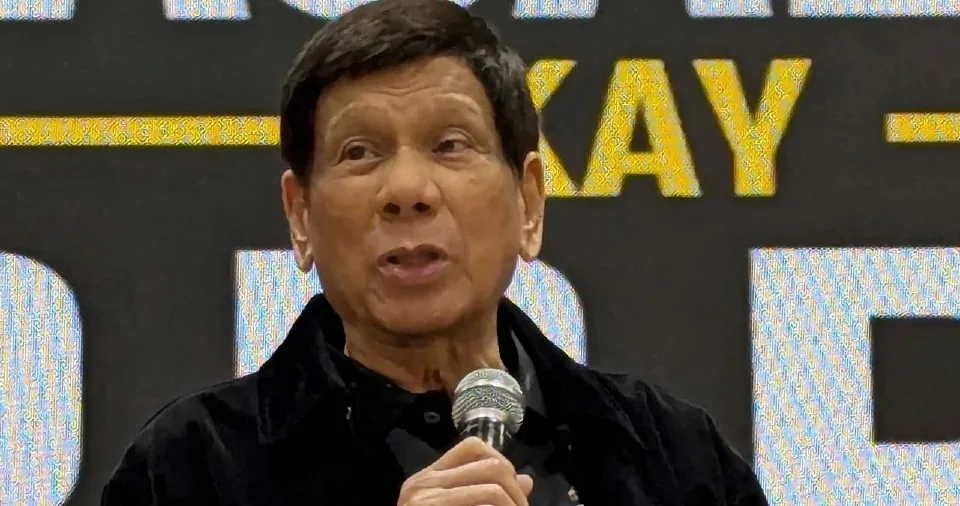
THE HAGUE — Former Philippine President Rodrigo Duterte goes on trial at the International Criminal Court beginning Monday in a case the court says is one of the most closely watched in its 24-year history.
Duterte is the first former Asian head of state to be tried at the ICC. The court has faced intense international pressure, including wide-ranging sanctions from the United States, ahead of the proceedings.
Here are five key facts about the case.
What are the charges?
Duterte faces three counts of crimes against humanity for allegedly being an indirect accomplice to killings or attempted killings of people suspected of using or dealing drugs during a campaign known as the "war on drugs."
Pretrial judges described the actions as a widespread and systematic attack on the civilian population dating back to when Duterte was mayor of Davao City and continuing into his presidency.
The court will examine 49 incidents that prosecutors say led to 76 deaths and two attempted killings. Prosecutors say those incidents represent only part of the broader alleged campaign of abuse.
The ICC noted hundreds were killed while Duterte was mayor of Davao, and thousands died after he became president.
Count one concerns 19 alleged killings between 2013 and June 2016 when Duterte was mayor of Davao City. The court will review nine of those incidents.
Count two covers killings of so-called "High-Value Targets" between July 2016 and July 2017, during Duterte's presidency. Five incidents involving 14 deaths will be examined.
Count three involves 35 incidents in operations described as "cleaning barangays (villages)," with 43 alleged killings and two attempted killings under review.
How will the trial proceed?
The first day is expected to draw large interest, with the public gallery full and hundreds of Duterte supporters and victims’ relatives likely to gather outside the court.
Judge Joanna Korner will read the charges to Duterte, 81, ask whether he understands them and record whether he pleads guilty or not guilty.
Prosecutors are expected to give an opening statement of about three hours, followed by less than three hours for victim representatives.
Defense lawyer Peter Haynes said he is likely to respond after the prosecution and victim representatives have presented their openings.
After openings, the prosecution will present its case and call about 100 witnesses. Victim representatives will then make statements before the defense presents its case.
Duterte is presumed innocent until proven guilty beyond a reasonable doubt and will have the right to appeal any conviction.
How long will the trial last?
The trial is expected to take several years.
The prosecution has been allocated 150 hours to present its case, not including time for defense cross-examination.
Judge Korner has limited daily sittings to a maximum of four hours, citing Duterte's age and frail health. Sessions will include regular breaks.
After hearings conclude, a panel of three judges will issue a ruling within a reasonable time. The ICC has in past cases taken more than a year to reach decisions, and officials expect this trial to be lengthy given its complexity and high profile.
Is Duterte fit to stand trial?
Duterte's health has been a central issue, but judges found him fit to be tried after evaluations by an independent panel of doctors.
During an initial video appearance in March 2025, the former leader appeared disoriented, confused and spoke in a faint voice. His defense team has said he suffers significant memory loss and sometimes cannot recall his lawyers' names.
He was excused from some in-person pretrial hearings, but Judge Korner said he is expected to attend court each day during the trial.
Duterte attended physically for the first time in September and appeared to follow the proceedings before waving to the public gallery at the end of the hearing.
What penalties could he face?
At the ICC, sentencing occurs separately after a conviction. Life imprisonment is rarely imposed, and any time already served is deducted from a sentence.
The court may also order compensation to victims if Duterte is found guilty; that reparations process is handled separately from sentencing.
© New Straits Times Press (M) Bhd
Source: Harian Metro